
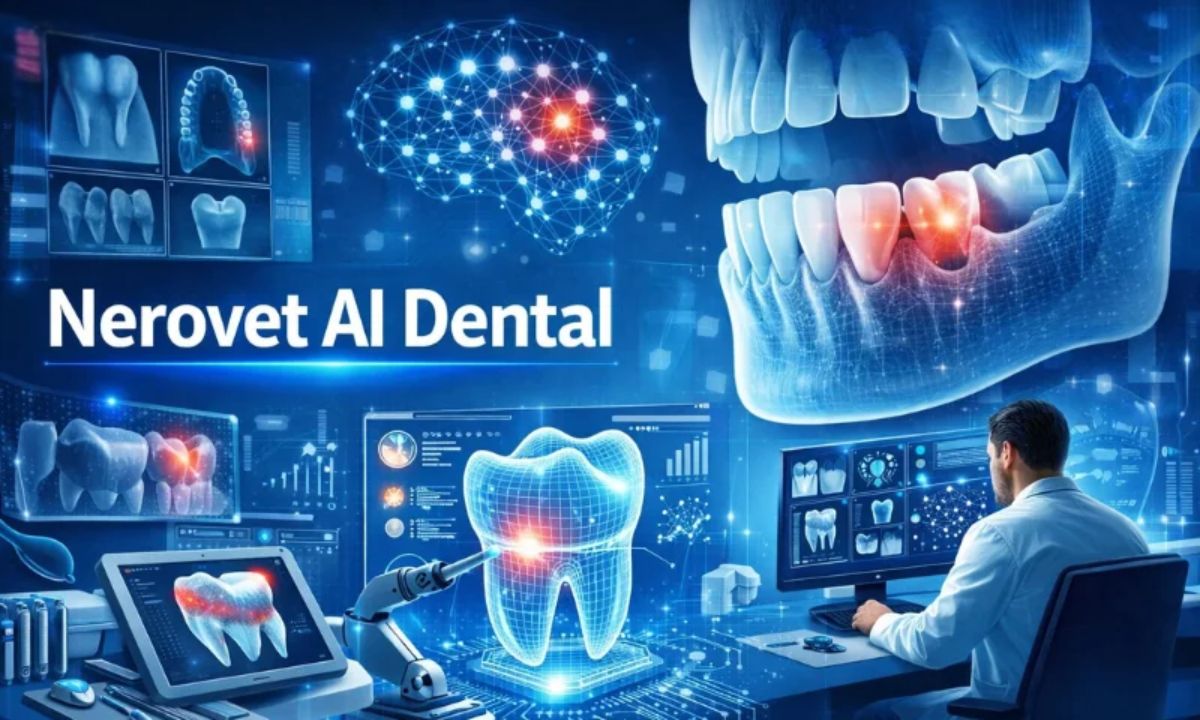

Artificial intelligence is changing healthcare at an incredible speed, and dentistry is becoming one of its most practical use cases. Among emerging names attracting attention in this space is Nerovet AI Dental, a platform associated with AI-assisted dental analysis, early detection support, workflow improvement, and smarter treatment planning. Publicly available information suggests that Nerovet positions itself as an AI-powered dental technology platform focused on image analysis and clinical support rather than replacing professionals.
For modern clinics, the promise of AI is simple: faster insights, better communication, and more efficient care. Dentists today manage large volumes of radiographs, records, and patient expectations. AI tools aim to reduce repetitive work while helping providers make more informed decisions.
This guide explains what Nerovet AI Dental is, how it may support earlier problem detection, improve treatment planning, streamline daily clinic operations, and what dental professionals should consider before adopting AI solutions.
Quick Bio Table
| Detail | Information |
| Company Name | Nerovet AI Dental |
| Industry | AI Dentistry / Dental Technology |
| Category | Artificial Intelligence Healthcare |
| Primary Focus | Dental imaging and workflow support |
| Core Technology | Machine Learning, Image Analysis |
| Main Users | Dental clinics and healthcare professionals |
| Operating Model | AI-assisted decision support |
| Launch Period | Public attention increased in 2025–2026 |
| Target Market | Modern dental practices |
| Function | Diagnostic assistance and treatment optimization |
What Is Nerovet AI in Dentistry?
Nerovet AI Dental is generally described as an artificial intelligence platform designed to assist dental professionals by analyzing dental images and supporting clinical decisions. Public descriptions of the platform suggest capabilities around identifying patterns in X-rays, intraoral images, and digital records to help surface findings that may require professional review. Available materials emphasize that the technology serves as support rather than replacing dentists.
AI in dentistry typically relies on computer vision and machine learning. These systems are trained to review thousands of historical dental images and identify recurring patterns linked with oral conditions. The software can then highlight suspicious areas for clinical evaluation. This process may improve consistency and reduce the chance of overlooked details during busy clinic hours.
Nerovet enters a market that already includes major AI-focused dental companies such as Overjet, Pearl, and VideaHealth. While these established platforms focus heavily on human dental imaging and enterprise environments, public descriptions suggest Nerovet is exploring broader accessibility and workflow support models.
How Nerovet AI Helps Find Problems Early
One of the strongest arguments for AI in dentistry is earlier detection. Dental disease often develops slowly, and subtle changes can sometimes be difficult to identify during routine reviews. AI systems are built to scan large image datasets quickly and point out areas that deserve closer examination.
According to publicly available descriptions, Nerovet AI Dental aims to support recognition of conditions such as early-stage decay, structural abnormalities, periodontal changes, and image irregularities. Similar AI technologies in dentistry analyze contrast, shapes, density shifts, and historical image comparisons to identify patterns faster than manual review alone.
Early identification matters because treatment outcomes often improve when problems are addressed before progression. A cavity treated early may avoid more complex procedures later. Likewise, early awareness of bone changes can support preventive approaches. AI acts as an additional review layer—not a diagnosis—helping clinicians maintain consistency and improve confidence in decision-making.
Clinics adopting AI frequently describe the technology as a “second opinion” system that improves visibility rather than replacing expertise. Community discussions among dental professionals show growing acceptance of this support model while maintaining human oversight.
Making Treatment Plans Better and More Personal
Modern dentistry increasingly focuses on personalized care instead of one-size-fits-all treatment recommendations. AI contributes by organizing information into clearer insights that clinicians can interpret and adapt.
Nerovet AI Dental is commonly associated with image-supported planning and clinical recommendations. Rather than creating automatic treatment decisions, the software may assist providers by organizing imaging findings, highlighting trends, and generating visual explanations patients can understand more easily.
Treatment planning becomes stronger when providers combine multiple sources of information including radiographs, oral history, lifestyle factors, and follow-up records. AI tools help unify this information into a more structured workflow.
Another advantage is patient communication. Many patients struggle to understand technical dental language. Visual overlays and highlighted findings can make treatment discussions clearer and increase trust during consultations. Clinics using AI-supported communication often report improved acceptance of recommended treatment plans because patients better understand the reasoning behind them.
Helping Daily Work Inside the Dental Clinic
Dentistry involves more than diagnosis. Daily operations include scheduling, imaging reviews, patient communication, documentation, and treatment coordination. AI is increasingly being introduced to reduce administrative burden.
Nerovet AI Dental and similar platforms are often discussed as workflow tools that support imaging review, automate repetitive tasks, and organize patient information. Some solutions integrate with imaging software and records to reduce manual handling.
Operational efficiency has become especially important as clinics face staffing pressure and rising patient expectations. Automation may assist with generating reports, organizing imaging findings, and preparing consultation materials.
Across the broader dental technology market, clinics are also experimenting with AI-driven appointment systems, patient engagement tools, and automated communication platforms. Industry examples show growing interest in reducing front-desk workloads and minimizing missed appointments through automation.
Importantly, successful implementation depends on training and clinical processes. Technology works best when integrated gradually rather than replacing existing systems overnight.
Good Things for Patients and Dentists
The benefits of AI in dentistry extend to both providers and patients. For dentists, efficiency and consistency can improve decision support and reduce repetitive administrative tasks.
One major advantage is speed. AI can review image sets rapidly and highlight areas requiring professional attention. That may shorten review time and allow more focus on patient conversations and treatment quality.
Patients benefit through clearer communication and potentially earlier intervention. AI-supported visuals may help explain findings more effectively, reducing uncertainty during consultations.
Another benefit is standardization. Larger practices often seek consistency across teams and locations. AI systems can support uniform image review methods and create a common reference framework for clinical discussions.
At the same time, healthcare decisions remain the responsibility of licensed professionals. Trust grows when AI supports expertise rather than replacing it.
Things to Think About and How to Use AI Wisely
AI adoption in healthcare requires careful evaluation. While innovation creates opportunities, responsible implementation matters just as much as performance.
One important factor is clinical validation. Healthcare organizations typically look for published evidence, transparent methodology, and regulatory information before integrating AI tools into patient workflows. Public commentary around Nerovet notes that independent validation and regulatory transparency remain areas users should review carefully before making decisions.
Data privacy is another priority. Dental records contain sensitive information, making secure storage and compliance essential. Clinics evaluating AI should examine privacy policies, encryption standards, and system permissions.
Training also matters. Teams must understand AI outputs and avoid treating suggestions as final decisions. Effective use means combining AI insights with professional judgment, patient history, and clinical expertise.
The strongest model is collaboration: technology supporting professionals rather than directing care.
Use this artical : ActiveVitalSpark com – Spark Your Active Life Naturally
What the Future Holds for AI in Dentistry
The future of dentistry is expected to become increasingly digital. AI, imaging systems, automation, and connected patient experiences will likely continue expanding across the industry.
Future developments may include stronger predictive analytics, better integration with digital scanners, faster reporting tools, and more personalized treatment simulations. Industry momentum suggests AI will become a standard layer inside many clinical environments rather than a separate tool.
For platforms such as Nerovet AI Dental, long-term success will depend on clinical credibility, transparency, and measurable outcomes. Healthcare adoption usually favors technologies that demonstrate reliability through studies, practitioner trust, and real-world performance.
Dentists who begin exploring AI now may gain operational advantages while preparing their practices for the next generation of patient expectations.
Frequently Asked Questions
1. What is Nerovet AI Dental used for?
Nerovet AI Dental is publicly described as an AI-supported dental technology platform that assists with image analysis, workflow support, and treatment planning assistance.
2. Can Nerovet AI replace dentists?
No. AI systems support decision-making and pattern recognition, but licensed dental professionals remain responsible for diagnosis and treatment.
3. Does Nerovet AI work with dental imaging?
Public descriptions indicate the platform may analyze dental X-rays, imaging records, and visual dental data to assist reviews.
4. Is AI accurate in dentistry?
Accuracy varies by platform and validation methods. AI is generally positioned as a support tool rather than a standalone diagnostic system.
5. Should clinics adopt AI dental tools in 2026?
Clinics considering AI should evaluate clinical evidence, privacy protections, workflow compatibility, and staff training before implementation.
Conclusion
Nerovet AI Dental reflects a broader movement toward intelligent, data-supported dentistry. As clinics face increasing pressure to deliver faster, more personalized care, AI technologies are becoming part of everyday practice. Current public information suggests Nerovet focuses on imaging support, earlier issue recognition, workflow improvement, and better patient communication.
However, the most effective use of AI remains balanced adoption. Dentists, hygienists, and clinical teams continue to provide the expertise, judgment, and human connection that technology cannot replace. When implemented carefully, AI may become one of the most valuable support tools shaping modern dentistry in 2026 and beyond.

